
A torch does not light the whole road. It shows where to take the next step.
For Bill Dever, that step is clear: make Canadian genre cinema bolder, more commercially minded and unmistakably its own. As President of Andromedia Studios, he is building a home for stories with sharp hooks, local roots and room to travel: films that invite audiences in with a monster, a mystery or a madcap summer on the lake, then give Canadian filmmakers more chances to do the work.
The stakes are bigger than one movie. If Canadian genre filmmaking is going to grow, it needs more than good intentions. It needs productions, practical experience and a steady pipeline of original stories. Dever’s answer is to build.
Four decades in the genre trenches
Dever’s career spans roughly four decades and nearly every side of a production: writing, producing, directing, editing, cinematography and acting. Credited as Bill Dever and William Dever, he has worked across horror, science fiction, action and comedy. That range gives him a producer’s view of the whole machine, not just the story on the page, but the many jobs required to get a film made.
His credits reach back to Canadian features including Personal Exemptions (1989), China Frost (1991), Mountain Fury (1991) and Girl Trouble (1995). He served as video producer on Abraxas: Guardian of the Universe (1990), and as line producer on Savage Land (1994), Billy Lone Bear (1996) and Operation Dunkirk (2017).
Genre fans may also recognize his work with director Jim Wynorski on Fire from Below (2009), Monster Cruise (2010), Camel Spiders (2011), Gila! (2012) and Sharkansas Women’s Prison Massacre (2015). His credits with Jeff Burr include Resurrection (2010) and American Resurrection (2022).
Dever has also taken on multiple roles within a single production. On The Sandbox (2009), he wrote, directed, produced and shot the film. In 2024, he directed the short documentaries Foolproof Filmmaking and Foolproof Filmmaking: Making Faith-Based Movies.
That kind of experience is practical capital. Genre movies move quickly from premise to production. A producer who understands multiple departments knows the work is not finished when someone says, “Great idea.” The next question is how to make it real.
Build the studio. Don’t wait for permission.
In 2024, Dever founded Andromedia Studios, operating as Andromedia Distribution Inc., a Canadian production and distribution company. The choice reflects a simple conviction: if Canadian filmmakers want more opportunities to make original, audience-facing movies, someone has to help create the conditions for them.
Andromedia describes its focus as lower-budget genre films across horror, science fiction, fantasy and comedy. The aim is to produce bold, original theatrical films while cultivating the next generation of Canadian film talent. It is an ambitious brief, but a clear one: bring a commercial premise together with Canadian stories, places and creative voices.
That matters in a landscape where a lot of Canadian production work is built around serving someone else’s project. Those productions can bring valuable experience, but Dever argues that the industry also needs a training ground for stories conceived and produced here.
“Canada needs a training ground outside of U.S.-based service productions and Telefilm-defined Canadian content,” he has said. “It’s time we produce movies with commercial appeal and diversify this industry. There are many Canadian voices deserving of recognition, and we want to shine a light on those who are committed to the success of Canadian cinema.”
It’s a producer’s argument, not a rejection of one kind of filmmaking in favour of another. Canada needs more routes into the work: more production opportunities, more space for commercial storytelling and more chances for emerging creatives to build their craft on set.
Canuxploitation: the spark and the next chapter
In November 2025, Andromedia announced an initiative to revive and reimagine the spirit of Canuxploitation, the wave of Canadian B-movies that flourished in the late 1970s and early 1980s. The plan is to honour the energy of those cult predecessors while making new homegrown genre films for contemporary audiences.
The point is not to recreate the past frame for frame. It is to carry forward the nerve: big premises, bold choices and stories that don’t apologize for wanting to entertain.
“Canadian movies have long held a respected place in the global film market,” Dever said in the announcement. “I believe it’s time to inject more fun and unbridled creativity into Canadian cinema. We have a rich history of genre filmmaking, and we’re excited to build upon that foundation.”
Fun is not a small ambition. It is an invitation. A creature feature can bring audiences together. A horror thriller can turn a familiar place strange. A comedy can make Canadian identity part of the joke, and the heart of the story. The hook gets people through the door; the point of view gives the film its own flag.
Three features. Three very Canadian hooks.
Andromedia’s 2026 features put that idea on screen with distinct genres, settings and conflicts. Each starts with a premise you can pitch in a breath. Each puts Canadian places and talent at the centre.
Sorority Shark Attack: a lake with teeth
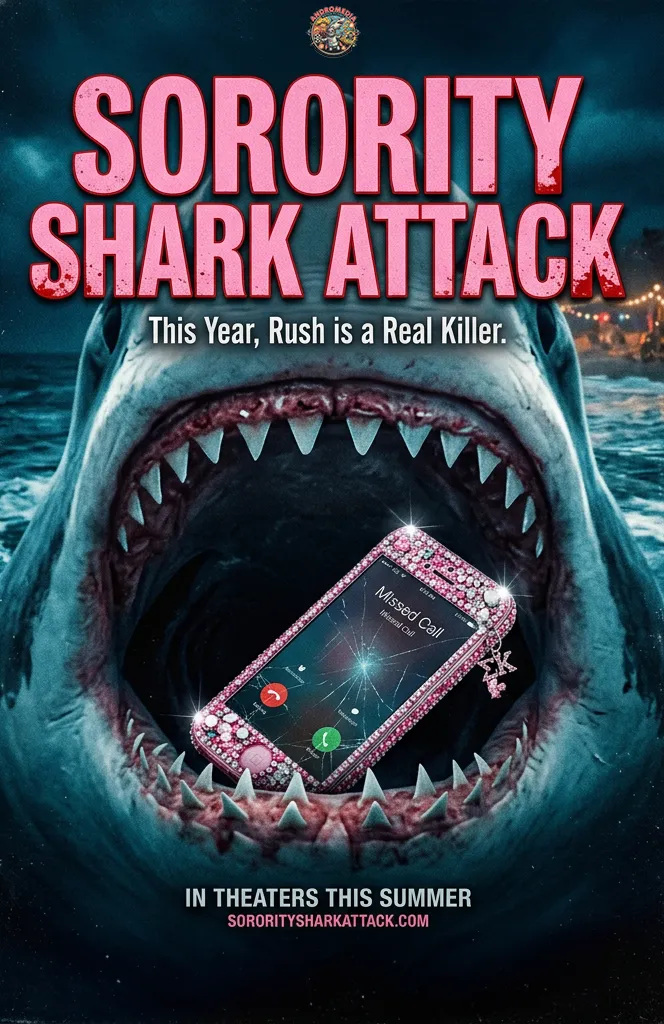
At an Ontario lake, a genetically engineered bull shark turns a student getaway into a fight to survive. Directed by David Langlois, the creature feature was filmed primarily in Bewdley and features the annual Head of the Trent celebration. Bill Dever executive produced; Sam Dever produced.
The premise brings classic creature-feature mayhem to a distinctly local setting. See the Sorority Shark Attack project page, or read the filming announcement.
Storm Warning: the dead are at the door
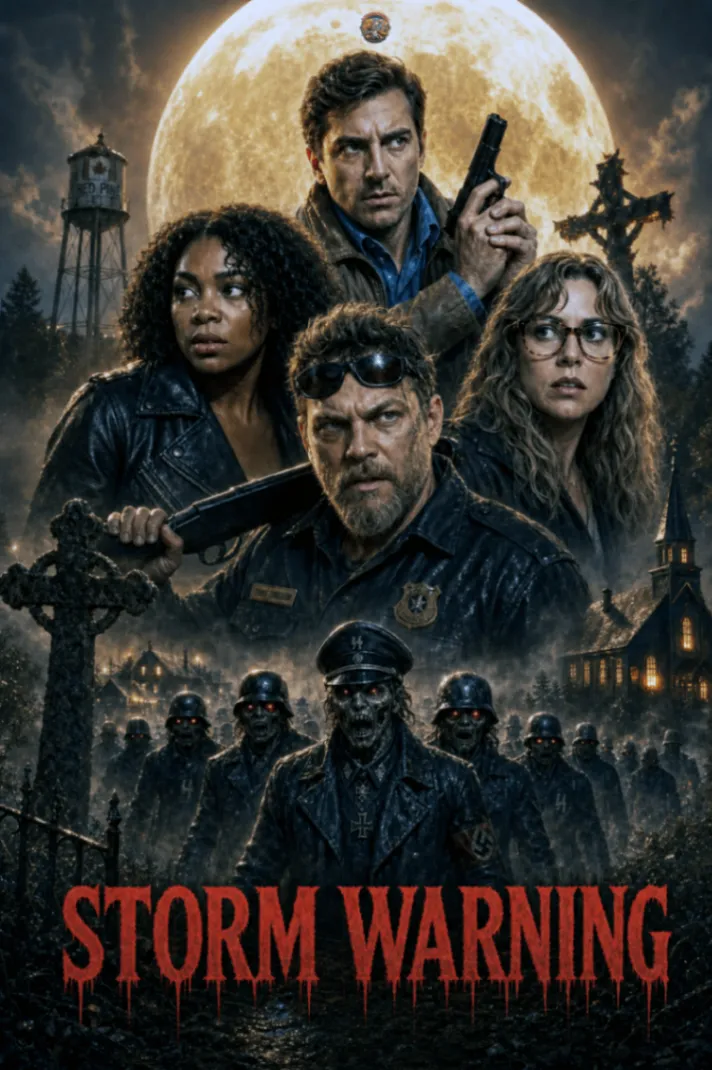
In this horror thriller, a hidden Nazi experiment brings an undead threat to present-day Canada. Written by Dever, directed by Drew Antzis and produced by Sam Dever, Storm Warning completed principal production, announced June 2, 2026. Its cast includes Kate Mayhew, Marc Rico Ludwig, Curtis Harrison, Eddie Curry, Lambros Bryan Demos, Jemilla Mills-Smith, Ross Mullan and Rick Bland. Jack Peresin served as cinematographer.
The film turns a high-concept genre premise into a Canadian production, filmed in Guelph. Meet the project on the Storm Warning page, or read the production announcement.
Lake Patrol: cottage country fights back
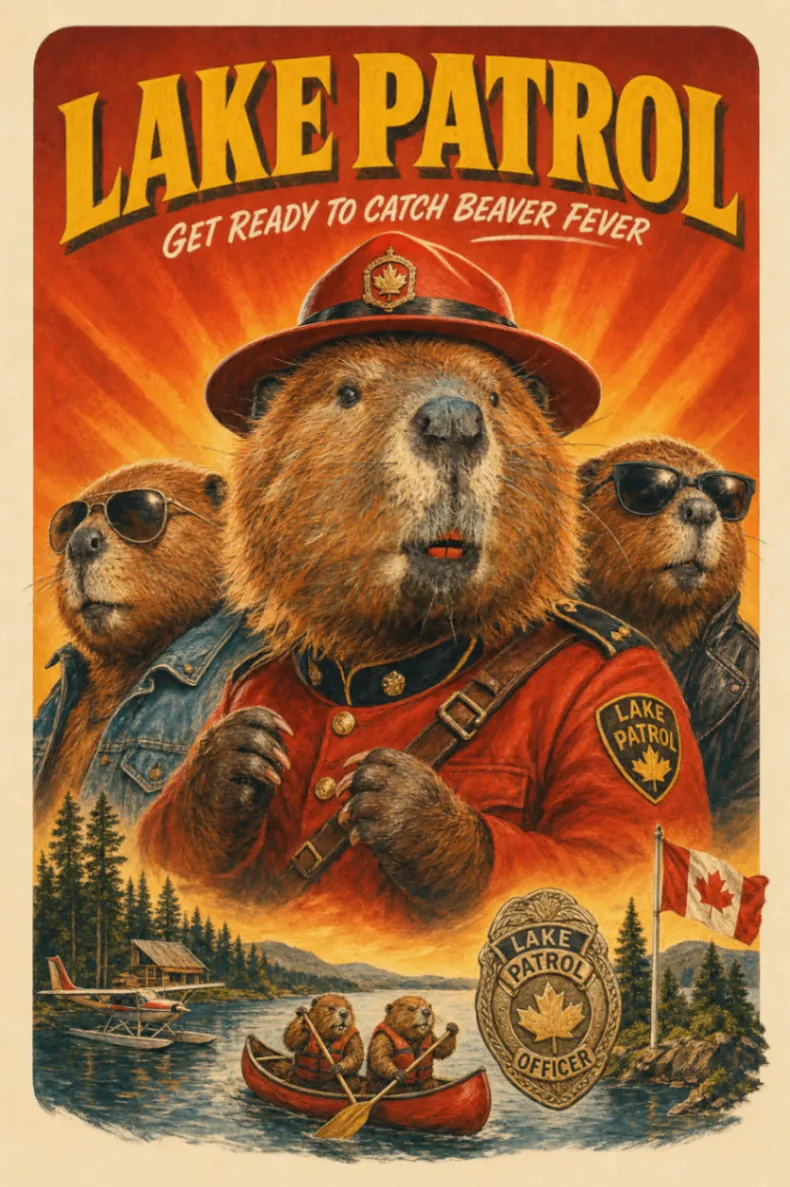
Greedy developers threaten a beloved lake and its cottage-country traditions. The unlikely defence? A crew of underdogs, including a militia of chronically inebriated beavers. Directed by Drew Antzis and produced by Sam Dever, Lake Patrol is a comedy with a distinctly Canadian summer at its centre. Dever wrote the screenplay and describes the film as “a wacky, fun-filled comedy and heartfelt tribute to Canada, cottage country, and the great Canadian summer.”
Principal photography took place on Rice Lake near Roseneath, Ontario, from September 7 to 29, 2026, with production support from Alpine Resort. The film stars Izzy Carter, Matthew Gallagher Heakes, Eddie Curry and Lambros Bryan Demos. As Dever put it: “Given the politically charged atmosphere of our neighbours to the south, we think our stories are more than worthy of telling and the world is wanting more Canada… We think it’s time that we raise our own banner.” Then comes the perfectly timed follow-up: “And, at the end of the day, who doesn’t want to have a little fun?”
Read more about the film in The Peterborough Examiner, and visit the Lake Patrol project page.
A torch is meant to be passed
For Dever, the case for Canadian genre cinema is cultural, but it is also practical. A working slate creates chances to make films. A production gives emerging creatives a place to learn the craft. A distinctive premise gives exhibitors and audiences something concrete to consider. The model depends on connecting all three.
That is the ambition behind Andromedia: to make an indie film production company that backs bold stories and helps build a deeper base for independent film production. The slate’s range, from horror and comedy to sci fi film production, reflects that genre-first approach. Andromedia’s wider work in distribution and digital media production points to a simple business reality: making the film is one part of the journey; connecting it with an audience matters too.
Dever’s own career shows how long that journey can be. The goal now is to make the path more visible to the filmmakers coming up behind him, and to give them more than a pep talk. Give them a set. Give them a story worth telling. Let them learn by doing.
“Lake Patrol will feature the very best of Canada,” Dever has said. “It’s a big part of our commitment to making films that are not just commercially successful but thematically appealing.”
That is the torch: not nostalgia for its own sake, and not a promise of overnight transformation, but a commitment to keep making the next film. For genre fans, the invitation is to watch for stories with a Canadian pulse and a lively streak of trouble. For exhibitors, it is a slate built around clear, pitchable premises. For independent filmmakers, it is a call to bring forward the bold idea.
Explore the Andromedia Studios slate, or get in touch. The next chapter of Canadian genre cinema will need fresh voices, and room for them to make some noise.