
Some filmmakers wait for the right door to open. Lloyd Kaufman built a studio, grabbed a camera, and made his own entrance.
In 1974, Kaufman and business partner Michael Herz founded Troma Entertainment to make and distribute independent films on their own terms. The result was more than a company. It was a loud, long-running argument against the idea that genre movies need a studio’s permission, or a mountain of money, to find an audience.
That spirit made Kaufman a filmmaker, producer, actor, author and champion of the beautifully stubborn. He has spent decades proving that independent film production can be a creative choice, not just a fallback plan. For anyone trying to make a movie outside the system, the lesson is still gloriously direct: get it made.
From Yale to the movie business
Kaufman’s route into filmmaking wasn’t a straight shot toward the nearest Hollywood office. A Yale graduate from the class of 1968, he studied Chinese studies and originally planned to become a social worker. Friends making student films pulled him toward cinema instead. He produced the low-budget feature Rappaccini and directed his own experimental black-and-white film, The Girl Who Returned, while still at Yale.
After graduating, he worked for Cannon Films, where he met director John G. Avildsen. The two collaborated on films including Joe and Cry Uncle! Kaufman kept writing and directing, too, building a varied early career that included The Battle of Love’s Return, Sugar Cookies, co-produced with Oliver Stone, and the Israeli comedy Big Gus, What’s the Fuss?
He also worked on productions that reached far beyond Troma’s future low-budget roots. He helped with locations for Saturday Night Fever and worked on Rocky. Then came The Final Countdown, which Kaufman produced. His experience on that production became a turning point: he later said it convinced him he didn’t want to deal with a major studio again.
That wasn’t a retreat from filmmaking. It was a decision about who should hold the reins.
In 1974, Troma gave Kaufman and Herz a place to make, produce and distribute independent action and comedy films. It was a practical answer to a familiar industry problem: if the established pipeline won’t carry your movie, build another route.
Toxie, toxic waste and the long road

Troma’s signature breakthrough arrived with The Toxic Avenger. The 1984 film turned an unlikely, deformed hero into a cult sensation, and eventually Troma’s official mascot. Sequels followed, along with a children’s television series, comic books and merchandise. Not bad for a movie that refused to behave itself.
Kaufman followed it with Class of Nuke ’Em High, co-directed with Richard W. Haines. The film found an audience of its own, with a long life on late-night cable and a place in Troma’s growing catalog of outrageous genre filmmaking.
But doing it your own way doesn’t mean the road stays smooth. Troma’s fortunes dipped after Troma’s War struggled at the box office and Sgt. Kabukiman N.Y.P.D. failed to make a commercial impact. Kaufman said cuts made to Troma’s War after the MPAA refused its intended R rating damaged the film. Later, the costly problems surrounding Tales from the Crapper demanded a reshoot and a rethink.
There’s no need to polish those setbacks into a victory lap. They’re part of the story. Building an independent film production company means taking risks without a corporate safety net, and sometimes the landing is rough. Troma’s answer was to regroup, reduce its scale and keep making films. Tromeo and Juliet, Terror Firmer, Poultrygeist: Night of the Chicken Dead and #ShakespearesShtstorm* all carry that unmistakable commitment to making the movie the makers want to make.
Troma also distributed films from other creators, including Trey Parker’s Cannibal! The Musical. The reach of the company’s model isn’t only in the films it made, but in the paths it helped keep open for filmmakers working outside traditional expectations.
A cameo can be a hand extended
Kaufman has built a lively second screen career as a cameo actor, turning up in films including Slither, Gamer, Guardians of the Galaxy and The Suicide Squad. His official filmography maps a performer who is happy to pop into a project, have some fun and keep the spirit of indie cinema moving.
Just as important, Kaufman is well documented for championing independent filmmaking through cameo appearances in low-budget horror films, often for free. It’s a small gesture with a big message: the people making movies outside the mainstream deserve support, attention and a chance to get their work in front of an audience.
That’s why we’re proud to say it plainly: Lloyd Kaufman appears in SORORITY SHARK ATTACK.
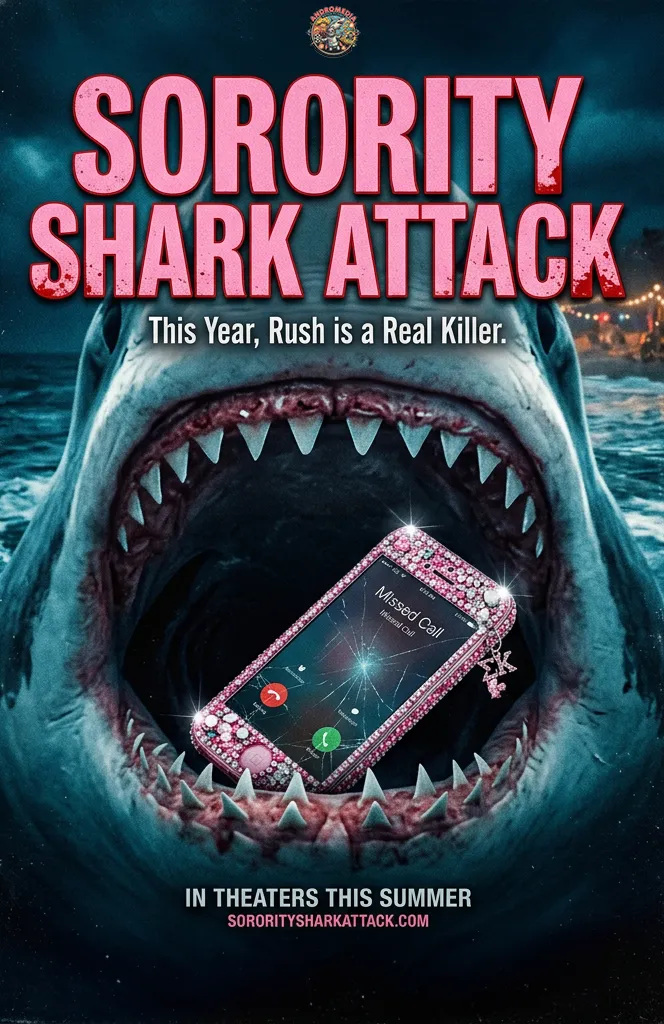
Written by Bill Dever, directed by David Langlois and produced by Sam Dever, SORORITY SHARK ATTACK is an Andromeda Studios comedy-horror creature feature and a loving homage to the exploitation films of the 1970s and ’80s. University students head to a Canadian cabin getaway and find themselves defending it from a genetically modified bull shark. The film was shot at Rice Lake, just south of Peterborough, combining practical effects and CGI for a creature-feature fight with plenty of local flavour.
Principal photography concluded in October 2025, and post-production wrapped on March 16, 2026. The film is planned for theatrical release. Robert Carradine (Revenge of the Nerds) leads the cast as Professor Marvin, alongside Kate Mayhew, Sarah Iranca, Elle Rose, Paul Matte and a broad ensemble.
Kaufman’s appearance is a natural fit: a deliberate hand extended to another independent production, and a reminder that genre filmmaking is a community as much as a craft. See the project on our SORORITY SHARK ATTACK page, or explore the wider Andromeda Studios slate.
The “Damn Movie” lesson
Kaufman didn’t keep the do-it-yourself message locked inside the Troma office. His books include Make Your Own Damn Movie!, Direct Your Own Damn Movie!, Produce Your Own Damn Movie! and Sell Your Own Damn Movie! The titles don’t exactly whisper. The advice is just as clear: learn the craft, make decisions, and take responsibility for getting the film across the finish line.
That message still matters in digital media production, where making a movie can be more accessible than ever, but reaching an audience still takes planning, relationships and nerve. You don’t need to imitate a studio campaign to make a project feel like an event. You need a clear hook, a distinct audience and a smart way to meet them.
For low-budget genre producers and independent exhibitors, that can mean building a regional partnership early and shaping a focused six-week marketing runway around the audience in a particular town. A filmmaker visit, a local screening and a direct relationship with a single-screen theater can make a modest release feel like a night worth leaving home for. The model doesn’t require permission. It requires people willing to work together.

Kaufman’s career doesn’t promise that every wild idea becomes a hit. It offers something more useful: proof that you can build a lasting creative life without waiting for the industry to invite you in. Troma took shape because its founders chose to make the films, distribute them and find their audience themselves.
From all of us at Andromeda Studios: thank you, Lloyd, for keeping the independent spirit noisy, inventive and gloriously hard to ignore. If you’re making a genre movie of your own, start with the story, and then, in the immortal spirit of Kaufman, go make your own damn movie.